《未解之谜 》-世界第八大奇迹 !史上最贵屋子凭空消失 ,至今没人找到 ...

铺 子

▲点击进入 相应板块
Unexplained Mysteries

BACKDROP
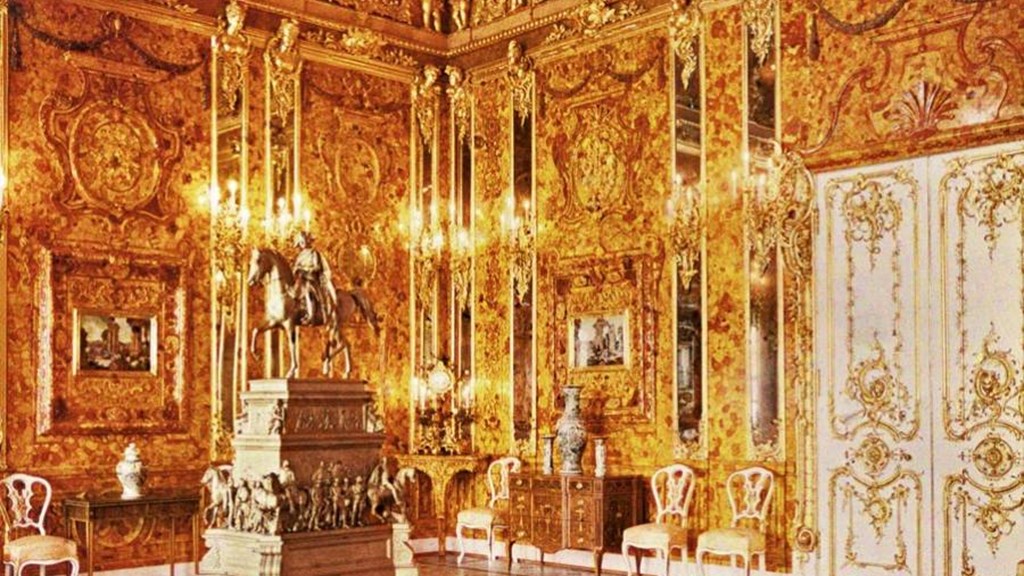
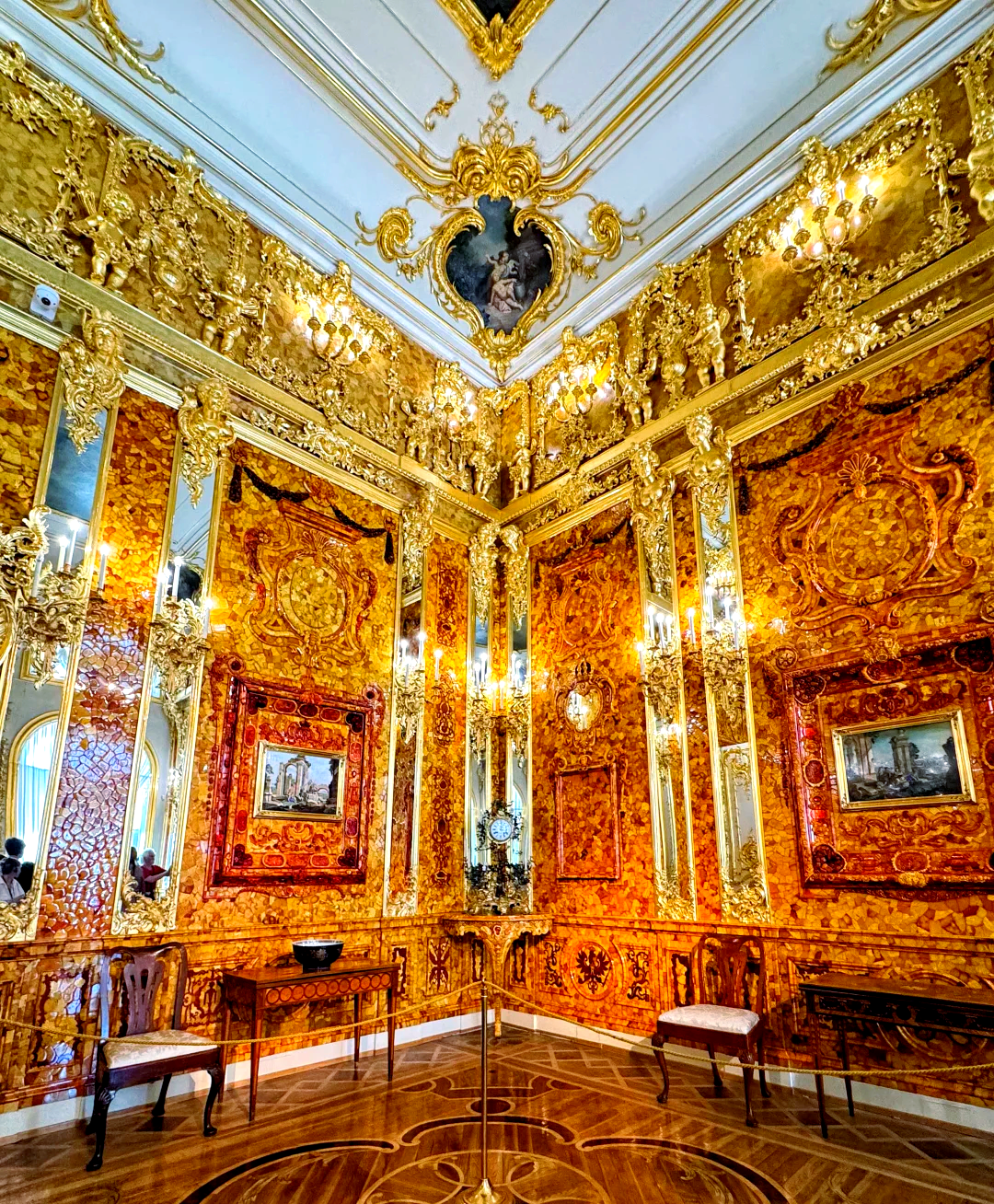
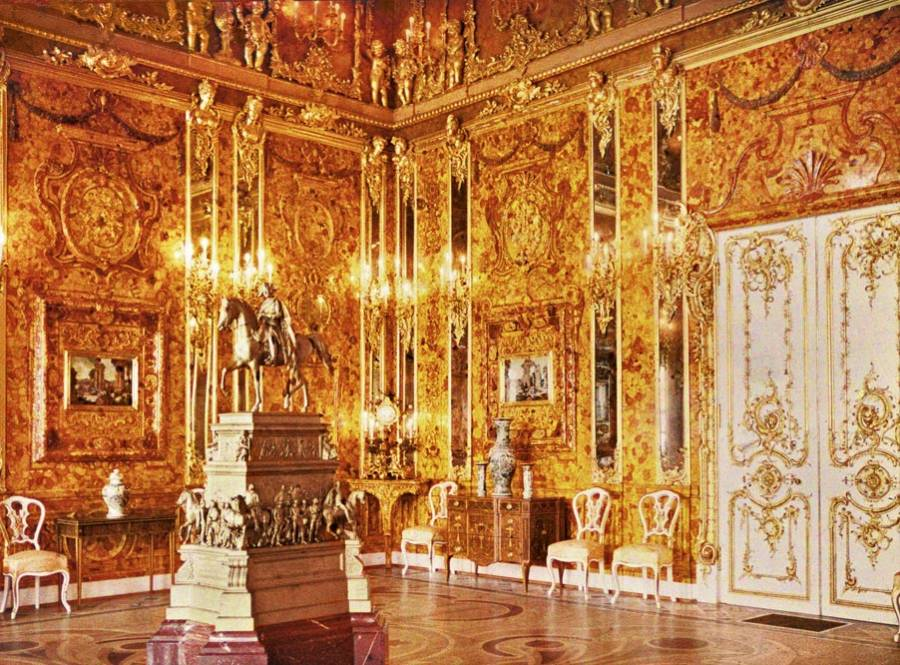
The Amber Room

背景介绍:
琥珀宫是18世纪初普鲁士国王腓特烈一世下令建造的巴洛克式琥珀装饰殿堂,以超过6吨波罗的海琥珀搭配黄金、宝石与镜面精心打造,工艺极尽奢华。
后作为国礼赠予俄罗斯沙皇彼得大帝,最终安置于叶卡捷琳娜宫,成为欧洲皇室最负盛名、价值连城的艺术珍宝,被誉为世界第八大奇迹。

故事简介:
这座象征着王权与极致工艺的琥珀宫殿在第二次世界大战期间被德军强行拆解掳走,运往德国柯尼斯堡后便在战火中彻底失踪,成为近代史上最著名的宝藏悬案;
后世历经数十年精心修复与重建,重现了它当年的璀璨样貌,而真正的琥珀宫至今依旧下落不明,留给世人无尽的谜团与传说。
Ep/02
MYSTERIES
Unexplained Mysteries
with Anlan
Welcome to a world of secrets and unanswered questions—a world of true mysteries that no one has ever solved. Today, we are going on a journey into the strange and the unexplained.
We will explore stories that are difficult to believe. We will hear about mysterious events that frightened whole towns, and about people who disappeared without any reason. From empty ghost ships to ancient, unbreakable codes... from strange sightings that science cannot explain, to crimes that have no answers.
So, turn the lights down. Get ready. We are going to look closely at the world's greatest unsolved mysteries.
Are you ready to explore the unknown? Let's begin.
In the early eighteenth century, in the cold forests of northern Europe, craftsmen began a project for a king that would later be called the Eighth Wonder of the World. It was not made of gold or marble, but of something far more unusual: amber, the fossilised resin of ancient trees. This masterpiece became known as the Amber Room. Its story is not only about beauty and art, but also about war, power, theft, and one of the greatest unsolved mysteries in history.
✏ Craftsmen 工匠,手艺人
✏ Eighth Wonder of the World 世界第八大奇迹
✏ Marble 大理石
✏ Amber 琥珀
✏ Fossilised resin 树脂化石
✏ Amber Room 琥珀宫
※琥珀宫:位于俄罗斯圣彼得堡附近凯瑟琳宫内的一座通体由琥珀和黄金装饰而成的极端奢华的建筑。曾在18~20世纪间一度被称作“世界第八大奇迹”。在第二次世界大战中被德军占据并被拆装运回德国,战后失踪。
More than three hundred years after it was built, the Amber Room has completely disappeared. No one knows where it is. Some believe it was destroyed. Others believe it is still hidden somewhere, waiting to be found. So how did an entire room made of priceless amber simply vanish?
Our story begins in Prussia, a powerful German state in the early 1700s. At that time, amber was extremely valuable. The Baltic region had the richest amber deposits in the world, and Prussian rulers controlled this trade carefully. Amber was called “Baltic gold”, and it was used to show wealth and power.
✏ Priceless 无价的
✏ Vanish 消失,不复存在
✏ Prussia 普鲁士
✏ Valuable 值钱的
✏ Baltic 波罗的海
✏ Deposits 遗存
Around 1701, King Frederick I of Prussia decided to create a room that would impress everyone who saw it. He ordered the best artists and craftsmen to design a room covered completely in amber panels, gold leaf, and mirrors. The work was incredibly difficult. Amber is fragile, and shaping it into large panels required great skill and patience. In fact, the project was so challenging that it was still not finished when Frederick I died.
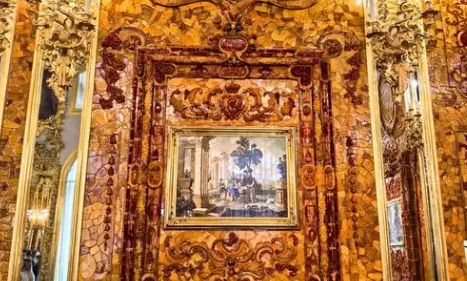
The result, even unfinished, was stunning. The walls glowed with warm shades of gold, orange, and honey. Light reflected from the mirrors and made the room shine. When candles were lit, the amber seemed almost alive. Visitors were amazed. Nothing like it had ever existed before.
But the Amber Room did not stay in Prussia for long.
✏ King Frederick I of Prussia 普鲁士国王腓特烈一世
✏ Fragile 易碎的
✏ Challenging 富有挑战性的
✏ Stunning 令人震惊的
✏ Glowed with 闪着....泛着...
In 1716, a powerful visitor arrived: Peter the Great, the ruler of Russia. He was tall, curious, and determined to modernise his country. Peter was deeply impressed by the Amber Room. He admired Prussian art and technology and wanted Russia to be seen as an equal to the great European powers.
Soon after, a political deal was made. Frederick I’s son, King Frederick William I, saw a perfect opportunity. The Amber Room was a beautiful but expensive, unfinished project. By giving it to Peter the Great as a gift, he strengthened their alliance and cleverly passed on the costly burden. The room was carefully taken apart, packed into boxes, and transported across Europe to Russia.
✏ Peter the Great 彼得大帝
✏ Modernise 使现代化
✏ Strengthened 加强
✏ Alliance 联盟
For many years, the Amber Room was moved from place to place. Finally, it found a permanent home in the Catherine Palace, near Saint Petersburg. There, Russian craftsmen, led by the brilliant Italian architect Bartolomeo Rastrelli, finally finished the job. They expanded and improved it, adding more amber, more gold, and more mirrors. By the mid-eighteenth century, the completed Amber Room covered over 55 square metres of wall space and contained several tons of amber.
Visitors described it as magical. One writer said it felt like standing inside a box of sunlight. Emperors and ambassadors proudly showed it to important guests. For nearly two hundred years, the Amber Room was one of Russia’s greatest treasures.
✏ Permanent 固定的(地址)
✏ Architect 建筑师
✏ Emperors 君主,帝王
✏ Ambassadors 大使
Then came the twentieth century—and with it, war.
In 1941, Nazi Germany invaded the Soviet Union. This invasion, known as Operation Barbarossa, was one of the largest military attacks in history. German forces moved quickly into Soviet territory, capturing cities and destroying villages.
As German troops approached Saint Petersburg—then called Leningrad—Soviet officials rushed to protect their cultural treasures. Paintings and statues were packed and evacuated. But the Amber Room presented a serious problem. The amber panels were old and fragile. Workers feared that removing them would destroy them completely.
✏ Invaded 入侵
✏ Operation Barbarossa 巴巴罗萨计划
✏ Military attacks 军事攻击
✏ Capturing cities 占领城市
✏ Troops 军队
✏ Cultural treasures 文化宝藏
✏ Packed 打包
✏ Evacuated 转移,撤走
Instead, they tried to hide the room. They covered the amber panels with paper and cloth, hoping the Germans would not realise what was behind the walls.
It did not work.
German art experts, part of a special unit tasked with looting cultural treasures, knew exactly what they were looking for. When they entered the Catherine Palace, they discovered the Amber Room almost immediately. Within just 36 hours, using forced Soviet labourers, they dismantled it, packed it into 27 crates, and sent it to Königsberg, a German city on the Baltic Sea (today called Kaliningrad).
There, under the care of the castle director, Dr. Alfred Rohde, the Amber Room was rebuilt inside Königsberg Castle and displayed to the public. Nazi officials proudly showed it as a symbol of German cultural power. For a time, the Amber Room had survived the war.
✏ Looting 洗劫
✏ Dismantled 拆卸
✏ Crates 板条箱
✏ Cultural power 文化霸权
✏ Survived 幸存
But as the war turned against Germany, danger returned.
In 1944, Allied bombing raids heavily damaged Königsberg. Fires broke out across the city, including in the castle. Then, in 1945, Soviet forces attacked and captured the area in a brutal battle. During this chaos, the Amber Room disappeared.
After the war ended, investigators from the Soviet KGB and other agencies searched desperately for it. Their prime witness was Dr. Rohde, but his story was confusing. He first claimed the room had been moved, then later said it was destroyed in the castle fire. Soon after his interrogations, he and his wife died suddenly of reported "typhus," a death that many found suspicious. The crates were gone. The Amber Room had vanished without a trace.
✏ Bombing raids 轰炸袭击
✏ Broke out 爆发
✏ Chaos 混沌,混乱无序
✏ Prime witness 关键证人
Since then, theories about its fate have multiplied.
The simplest explanation is that the Amber Room was destroyed during the bombing or the subsequent fire. Amber burns easily, and intense heat could have destroyed it completely. Many historians believe this is the most likely answer.
However, others are not convinced.
One theory says the Amber Room was secretly moved before the city fell. Some believe it was hidden in the vast network of underground tunnels, mines, or bunkers in the region. Germany has many abandoned mines, and for decades, treasure hunters and even state security services like the East German Stasi have searched them, following countless leads.
Another theory suggests the Amber Room was loaded onto a ship to be evacuated across the Baltic Sea—and that the ship sank, taking the amber to the bottom of the sea. Several shipwrecks, like the Wilhelm Gustloff or the Karlsruhe, have been explored, but no clear evidence has been found.
✏ Historians 历史学家
✏ Convinced 被说服,劝服
✏ Bunkers 防空洞
✏ Shipwrecks 沉船,遇难船只
There are also more dramatic stories. Some claim parts of the Amber Room were stolen by individuals and sold on the black market. Others believe it was taken to South America, Antarctica, or even the United States. These theories are exciting—but often based on rumours rather than facts.
From time to time, small discoveries give people hope. In 1997, a genuine Florentine mosaic panel believed to be from the Amber Room was found in Germany. It had been kept by a former soldier’s family. This proved that at least some pieces survived the war and left the castle.
Encouraged by this, searches continued. Teams used ground-penetrating radar, explored tunnels, and followed old military maps. Yet the complete Amber Room has never been found.
Because the mystery seemed unsolvable, Russia made a bold decision.
In 1979, Soviet experts began an ambitious project: to rebuild the Amber Room from scratch. This was not easy. The original techniques had been lost, and amber is difficult to work with. Craftsmen had to relearn old skills, studying the few surviving photographs and historical documents.
The work took over twenty years and cost millions. Finally, in 2003, the reconstructed Amber Room was completed and opened to the public in the Catherine Palace. Today, visitors can once again stand inside a glowing amber room and feel the magic that once amazed emperors.
✏ Genuine 真的
✏ Ground-penetrating radar 探地雷达
✏ Ambitious project 雄心勃勃的项目
✏ Open to the public 对公众开放
But even with the reconstruction, the mystery remains.
Where is the original Amber Room?
For some, the mystery is more important than the answer. The Amber Room represents the enormous cultural losses caused by war. It also shows how beauty can become a victim of power and conflict.
It raises uncomfortable questions. Who owns art taken during war? Should stolen treasures be returned? And how much history has been lost forever?
The Amber Room also reminds us of the power of stories. Its disappearance has inspired books, documentaries, films, and endless debates. It lives on in our imagination because it is both real and unreal—a true historical object wrapped in legend.
Perhaps one day, hidden behind a wall or buried deep underground, the Amber Room will be found. Or perhaps it was destroyed long ago, its amber turned to ash in the fires of war.
Until then, the Amber Room remains one of history’s greatest mysteries: a room of light that vanished into darkness, leaving behind only questions, hope, and the glow of a legend that refuses to fade.
✏ Enormous 巨大的
✏ Greatest mysteries 最大的谜团
✏ Fade 褪色,凋零
So, what do you think what happened to the Amber Room? Was it destroyed? Would it be found one day? Let us know in the comment section.
And until next time when I bring you a brand new mystery, I’ll see you then. Bye~
琥珀宫从普鲁士的匠心之作,变为俄德外交的馈赠,再成二战中被掠夺的珍宝,最终在战火硝烟里彻底失踪。
它是艺术的巅峰,也是权力与战争的牺牲品。
有人说它毁于炮火,有人坚信它仍藏于世间,零星文物的重现更让谜团愈加深邃。如今复刻版重现光彩,可原版的下落依旧悬而未决。
它不仅是一件消失的艺术品,更是一段悬在历史中的未解之谜,只是,我们能等到真相被揭开的那一天么?
排版长图:
责编/校对:
图片来源:
Jer.ry
Jenny
均来源于网络 | 侵删






▲点击以上图片,Get世界精选好物


