《未解之谜 》-柏拉图笔下神秘消失的超级文明 : 是寓言 , 还是史实 ?

铺 子

▲点击进入 相应板块
历史上,有太多伟大文明,都曾以极致的辉煌存在过,却又在朝夕之间化为乌有。
有人为世界第八大奇迹琥珀宫的失踪扼腕叹息(戳→跳转琥珀宫),也有人始终执着追寻那个在古籍中被反复记载、却至今下落成谜的史前帝国。
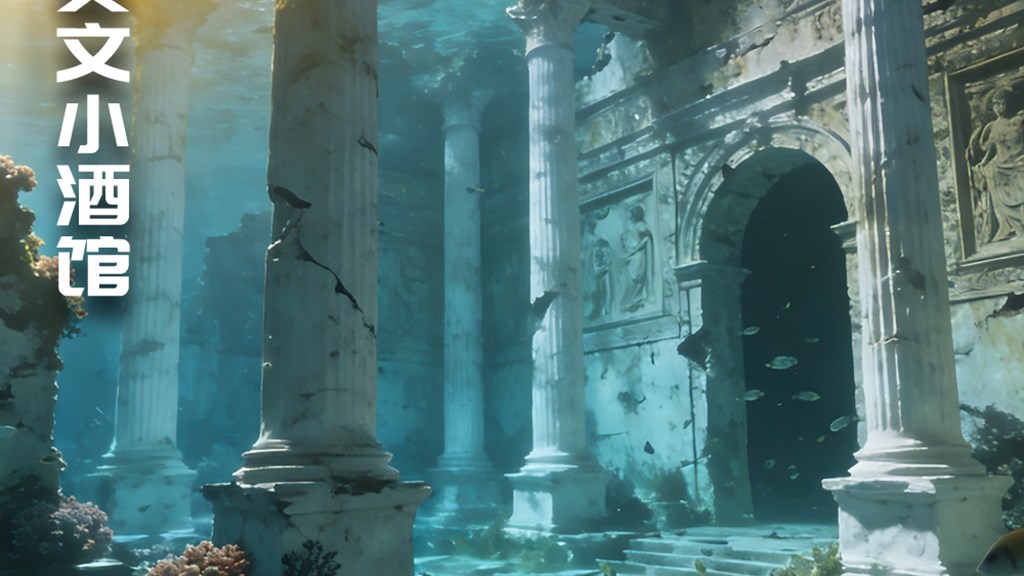
它就是柏拉图笔下,一夜沉没于海底的超级文明 ——亚特兰蒂斯。
这一切究竟只是古人编造的寓言,还是真实存在过、却被时间彻底抹去的史实?
今天的【未解之谜】里,安澜就来为大家讲讲这个困扰人类数千年的谜团。
Unexplained Mysteries

BACKDROP
Atlantis

背景介绍:
亚特兰蒂斯,又称大西洲,是人类历史上最著名的失落文明之谜。
它的唯一文字记载,来自古希腊哲学家柏拉图在公元前360年的《对话录》,书中通过《蒂迈欧篇》与《克里底亚篇》两篇对话,完整勾勒出这片神秘大陆的轮廓。
据柏拉图记述,亚特兰蒂斯坐落于海格力斯之柱对面,也就是今天的直布罗陀海峡以西的大西洋海域,是一片面积辽阔、国力强盛的巨型岛国。
这里拥有高度发达的文明与无尽财富,城邦建筑华丽,军事力量强大,曾与古雅典展开过激烈战争。
这个故事并非柏拉图原创,而是由雅典先贤梭伦从埃及祭司口中听闻,距今已有超过一万一千年的遥远历史。

事件简介:
传说中的亚特兰蒂斯文明因日渐傲慢与腐化,触怒神明,最终迎来毁灭性的惩罚。
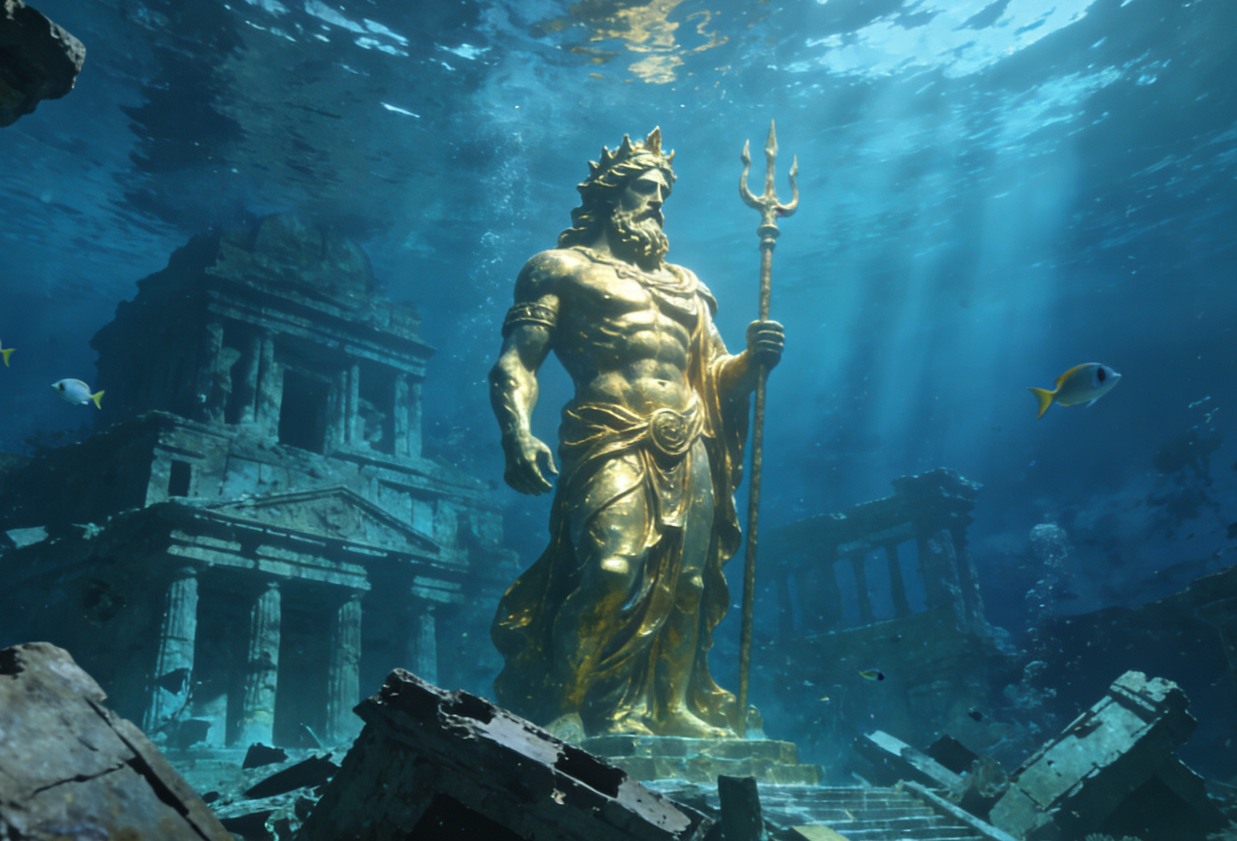
在短短一日一夜之间,强烈地震与滔天洪水同时降临,整座大陆轰然塌陷,彻底沉入大西洋深处,从此消失在人类视野中。
两千五百多年来,无数探险家、考古学家与研究者从未停止寻找,从大西洋海底到地中海岛屿,不断有疑似遗迹被发现,却始终无法给出定论。
它究竟是真实存在过的史前帝国,还是柏拉图用来阐释哲学思想的寓言,至今仍是悬而未决的世界级未解之谜。
Ep/05
MYSTERIES
Unexplained Mysteries
with Anlan
Welcome to a world of secrets and unanswered questions—a world of true mysteries that no one has ever solved. Today, we are going on a journey into the strange and the unexplained.
Are you ready to explore the unknown? Let's begin.
Imagine standing on a quiet beach at sunset. The sea is calm. The sky glows orange and purple. Somewhere beyond the horizon, under thousands of meters of dark water, there may be the ruins of a lost city — a city of shining temples, powerful kings, and advanced technology. A city that disappeared in a single day and night of disaster.
This is the mystery of Atlantis.
✏ Calm 风平浪静的
✏ Horizon 地平线
✏ Ruins 遗迹,废墟
✏ Atlantis 亚特兰蒂斯(传说沉没于大西洋的岛屿)
The story of Atlantis begins not with explorers or divers, but with a philosopher. Around 360 BCE, the ancient Greek thinker Plato wrote two dialogues called Timaeus and Critias. In these works, he described a powerful island kingdom that existed about 9,000 years before his time. According to Plato, Atlantis was located “beyond the Pillars of Hercules,” which most people today believe refers to the Strait of Gibraltar, the entrance to the Mediterranean Sea.
Plato tells us that Atlantis was rich and beautiful. The city was built in circles, with rings of land and water. At its center stood a magnificent palace and a temple dedicated to Poseidon, the God of the Sea. The Atlanteans were skilled engineers. They built canals, harbors, and great walls. They had a strong navy and controlled many lands across the ocean.
✏ Philosopher 哲学家、哲人
✏ Dialogues 哲学对话录
✏ Strait of Gibraltar 直布罗陀海峡
✏ Mediterranean Sea 地中海
✏ Magnificent 雄伟的、壮丽的
✏ Skilled 技术高超熟练的
✏ Canals 运河
✏ Harbors 港口
✏ Navy 海军
But there was a problem. Over time, the people of Atlantis became greedy and proud. They wanted more power. They tried to conquer other nations, including ancient Athens. In Plato’s story, the Athenians bravely defended themselves and defeated the Atlantean army. Soon after this defeat, a terrible natural disaster struck. In "a single day and night of misfortune," Atlantis sank beneath the sea and was lost forever.
That is the story. But is it history — or fiction?
Many scholars believe that Plato invented Atlantis as a moral lesson. Plato often used stories to explain his philosophical ideas. In this case, Atlantis may represent a society that became corrupt and paid the price for its arrogance. Athens, on the other hand, represents courage and virtue. From this point of view, Atlantis was never meant to be a real place. It was a warning.
✏ Greedy and proud 贪婪和骄傲
✏ Conquer 攻克,占领
✏ Athenians 雅典人
✏ Fiction 虚构的事
✏ Moral lesson 道德教训:通过讲述故事、事件或经历来传授道德观念和价值观。
✏ Arrogance 傲慢,自大
However, not everyone agrees.
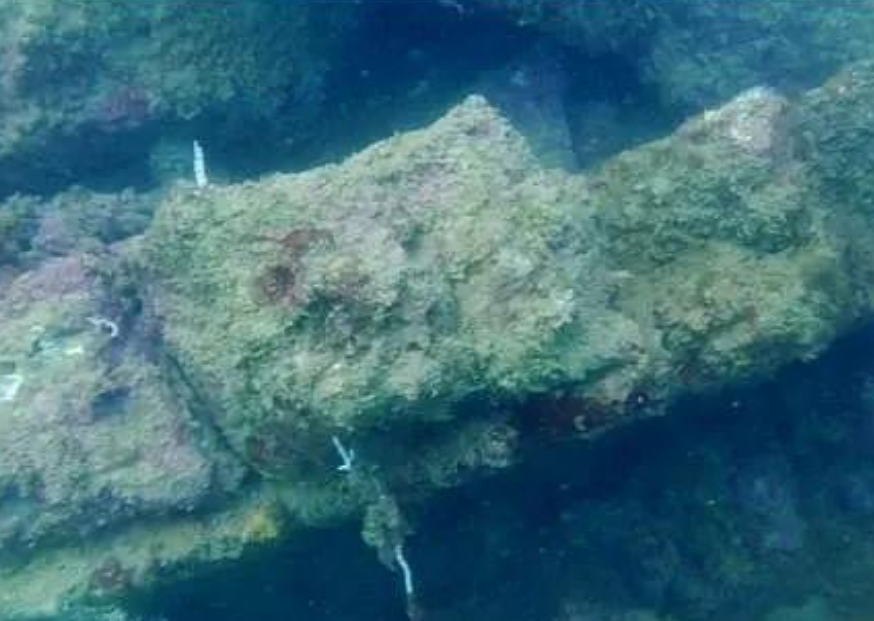
Over the centuries, explorers, writers, and dreamers have tried to find Atlantis. Some believed it was located in the Atlantic Ocean, near the Azores islands. Others thought it could be in the Caribbean, near the Bahamas. In the 20th century, some people connected Atlantis to the mysterious underwater structures near Bimini, known as the "Bimini Road". Large stone blocks lie beneath the water there, and some claim they are the remains of ancient buildings. Most scientists, however, believe they are natural rock formations.
Another popular theory links Atlantis to the island of Santorini in Greece. Around 1600 BCE, a powerful volcanic eruption destroyed much of the island, which was then home to the advanced Minoan civilization. The explosion was one of the largest in human history. It caused earthquakes, giant waves, and ash clouds that darkened the sky. Some researchers suggest that this disaster may have inspired Plato’s story. The Minoans were skilled sailors and builders, just like the Atlanteans. Perhaps the memory of their destruction survived in legend.
✏ Azores islands 亚速尔群岛
✏ Caribbean 加勒比地区
✏ Bimini 比米尼群岛
✏ Rock formation 岩石构造、岩石群
✏ Volcanic eruption 火山喷发
✏ Minoan civilization 米诺安文明(公元前3000年至公元前1100年间兴起于克里特岛的一个古代文明,以其精美的壁画、陶器和宫殿建筑而闻名。)
✏ Ash clouds 火山灰云
✏ Sailors 水手,海员
But there is a problem. Plato said Atlantis disappeared 9,000 years before his time — much earlier than the Minoan eruption.
Was he exaggerating? Was there a mistake in translation? Or was he simply trying to create drama?
The mystery deepens when we consider how detailed Plato’s description is. He gives measurements of the city. He describes its temples, its laws, even its animals — including elephants. Why include such specific details if the story is pure fiction? Some argue that Plato was repeating a much older Egyptian story. In his dialogue, he says that the tale of Atlantis was told to an Athenian lawmaker named Solon during a visit to Egypt. Egyptian priests, according to Plato, had ancient records describing the lost island.
Unfortunately, no such Egyptian records have ever been found.
During the 19th century, interest in Atlantis grew dramatically. In 1882, an American writer named Ignatius Donnelly published a book called Atlantis: The Antediluvian World. He argued that Atlantis was a real civilization that spread knowledge to ancient Egypt and Central America. Donnelly believed that similarities between pyramids in different parts of the world were evidence of a common source — Atlantis. His ideas were exciting, but they lacked strong scientific proof.
✏ Exaggerating 夸大的
✏ Egyptian priests 埃及祭司
✏ The Antediluvian World 史前世界、上古世界、洪水前的超级文明
✏ Scientific proof 科学依据
In the 20th century, the legend of Atlantis became connected with even more extraordinary claims. Some people said the Atlanteans had advanced technology, even flying machines or powerful energy crystals. Others linked Atlantis to psychic powers or alien visitors. These ideas are popular in books and films, but again, there is no solid evidence.
So why does the story of Atlantis continue to fascinate us?
✏ Extraordinary claims 缺乏足够证据或与常识相悖的主张。
✏ Psychic powers 超自然力
✏ Alien visitors 外星访客
✏ Solid evidence 确凿的证据
✏ Fascinate 吸引,迷住
Perhaps it is because it combines several powerful themes. First, there is the idea of a "Lost golden age" — a time when humans were wiser, stronger, and more advanced than we are today. Many cultures have similar stories. In the Bible, there is the Garden of Eden. In Greek mythology, there is the Golden Age of man. Atlantis fits into this pattern. It represents a perfect world that was destroyed.
Second, there is the drama of sudden disaster. The idea that an entire civilization could vanish in a single day is both terrifying and thrilling. Even today, we know that earthquakes, tsunamis, and volcanic eruptions can destroy cities. The eruption of Mount Vesuvius buried Pompeii in ash. Modern scientists study climate change and rising sea levels. The fall of Atlantis feels possible because nature is powerful.
Third, Atlantis speaks to our love of exploration. The ocean covers more than 70 percent of our planet. Large areas of the deep sea remain unexplored. Who knows what lies beneath the waves? Shipwrecks, ancient cities, unknown species — the ocean still holds many secrets. The dream of discovering Atlantis is part of the larger human desire to uncover hidden knowledge.
✏ Sudden disaster 突然发生的、造成严重损失的灾害事件。
✏ Vanish 突然消失不见
✏ Thrilling 令人震撼激动的
✏ Terrifying 令人恐惧害怕的
✏ Tsunamis 海啸
✏ Mount Vesuvius 维苏威火山
✏ Speaks to 契合了
In recent years, technology has allowed scientists to explore the ocean floor more carefully. Submarines and underwater robots can dive to great depths. Sonar mapping reveals the shape of the seabed. So far, no clear evidence of a lost super-civilization has been found in the Atlantic Ocean. But research continues.
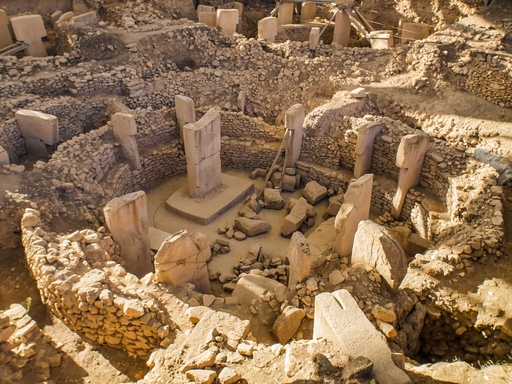
Interestingly, archaeology has revealed that ancient civilizations were often more advanced than we once believed. Underwater cities have been discovered off the coast of India. In Turkey, the ancient site of Göbekli Tepe shows that complex structures were built thousands of years earlier than expected. These discoveries remind us that history is full of surprises.
✏ Ocean floor 洋底 / 海底
✏ Submarines 潜水艇
✏ Underwater robots 水下机器人
✏ Sed bed 海床
✏ Archaeology 考古学
✏ Ancient civilizations 古代文明
✏ Advanced 先进的,高级的
✏ Off the coast 离岸、近海、靠近海岸
✏ Ancient site of Göbekli Tepe 土耳其东南部哥贝克力石阵
Still, most historians agree that Atlantis, as described by Plato, was likely a myth. Plato never presented it as a report of recent history. Instead, he used it in a philosophical discussion about the ideal state, justice, and human nature. When the people of Atlantis became selfish and aggressive, they lost the favor of the gods. Their destruction was not only a natural event, but also a moral lesson.
And yet, the mystery remains.
Some modern researchers suggest that Plato may have mixed real events with imagination. Perhaps there was a powerful island culture that suffered a natural disaster. Over centuries, the story grew larger and more dramatic. Details changed. Dates were exaggerated. What began as a memory of a local catastrophe became a legend of global importance.
✏ Myth 神话故事
✏ Ideal state 理想状态
✏ Selfish 自私的
✏ Aggressive 好斗、好侵略的
✏ Imagination 想象力
✏ Catastrophe 灾难
✏ Of global importance = globally important 具有全球重要性的、影响全世界的、举世瞩目的
It is also possible that Atlantis represents a warning for our own time. We live in an age of advanced technology and global power. We build enormous cities. We control powerful weapons. We change the climate of our planet. If pride and greed destroyed Atlantis, could the same happen to us? The story feels modern because its message is timeless.
In literature and popular culture, Atlantis appears again and again. It is the setting for novels, films, and video games. Sometimes it is shown as a magical underwater kingdom with glowing towers and strange creatures. Other times, it is presented as a lost scientific paradise waiting to be rediscovered. Each version reflects the hopes and fears of its own era.
But if we return to the quiet beach at sunset, the mystery becomes simple and personal. Somewhere beneath the waves, there may be only rocks and sand. Or perhaps there are ruins we have not yet found. What matters is not only whether Atlantis existed, but why we continue to search for it.
✏ Enormous 巨大的庞大的
✏ Timeless 不受时间影响的
✏ Setting 场景
✏ Rediscovered 重新找到
The legend of Atlantis reminds us that civilizations can rise and fall. It reminds us that knowledge can be lost. It encourages us to explore, to question, and to imagine. Even if Atlantis never existed, the story has survived for more than two thousand years. That, in itself, is remarkable.
So the next time you look out at the ocean, think of Plato, writing in ancient Greece. Think of sailors telling stories of distant lands. Think of cities shining in the sun, and of waves crashing over marble walls. Think of a single day and night of misfortune.
And ask yourself: Is Atlantis buried under the sea — or does it live in our imagination?
Perhaps the real treasure of Atlantis is not a lost city, but a powerful idea. An idea that challenges us to reflect on our own world, our own values, and our own future.
The sea keeps its secrets well. But the mystery of Atlantis continues to rise, again and again, like a shadow beneath the waves — never fully seen, never completely gone.
亚特兰蒂斯的存在,或许也正是对我们这个时代的一场警示。
我们身处科技高度发达、全球强权林立的时代,建造着庞大的都市,掌控着威力惊人的武器,甚至改变着地球的气候。
如果当年的傲慢与贪婪,曾毁灭过那个盛极一时的超级文明,那么同样的命运,会不会也在未来等待着我们?
这个古老的故事之所以时至今日依然鲜活,是因为它所传递的启示,超越时间,永恒不朽。
排版长图:
责编/校对:
图片来源:
Jer.ry
Jenny
均来源于网络 | 侵删






▲点击以上图片,Get世界精选好物


